Showing posts with label Netbook Tablet News. Show all posts

Wednesday, November 25, 2009

Latest LG X120 First Netbook

LG comes with their first latest LG X120 Netbook, it comes with unique features it includes 10.1-inch LED backlight screen, 1GB RAM, 160GB hard drive, built-in speaker, 1.3MP webcam and Wi-Fi connectivity. It includes AT&T DataConnect service agreement, it is power with XP.

LG X120 Netbook is best for college students, you can easily carry it in travel it comes with the weight of just 2.8lbs, it includes the best battery power it can run up to 7 hours in only one charge. Its display monitor is awesome, keyboard of this netbook is smooth. Design of this netbook is awesome, it is available in white color. It looks stylish and slim I am sure you will like to buy this latest LG X120 Netbook. This small device has great features you will enjoy to work on this netbook. It is equipped with advance technology. It is the LG’s first netbook hope it will hit the market.

LG is a well-known company for making electronic products in market and this latest X120 Netbook is best. If you are looking for the latest netbpook then just, try this LG X120 Netbook. You just have to spend $179.99 for buying this latest netbook, check out its latest details and images above.

http://instring.com/2009/11/24/latest-lg-x120-first-netbook/
Read More......

Chrome OS And The Microsoft Squeeze

Now that we've all actually seen Chrome OS, the immediate reaction that most are jumping to is that it won't be killing Windows anytime soon. But that doesn't mean it won't hurt Microsoft, and apply long-term pressure to the dominant OS. In fact, Google's positioning for Chrome OS reads like a page out of Apple's playbook, only the opposite.

Google is aiming Chrome OS right at the bottom of the market. That is to say, cheap computers, netbooks. Apple, of course, takes the opposite approach, targeting the high end of the market which their high-quality and high-margin machines. If Google is successful with its Chrome OS netbooks (let's call them ChromeBooks), what we could see is the squeezing of Microsoft, an idea I first laid out a month ago. With attacks from the top and bottom, Windows will be relegated to the middle. And ultimately, if Google has its way, marginalized.

There are a number of problems with being in the middle. First and foremost, the middle is average, boring, bland, etc. There's nothing particularly wrong with that, unless you're a company like Microsoft with an image problem. After years of taking hits, Microsoft is trying to revamp its image with expensive ads, new stores, and a new OS, among other things. But the middle is hard to sell. It's neither the cheapest nor the best. It's the thing people have to settle on.

Microsoft, of course, is also in the netbook space with Windows XP and now Windows 7. But after being a sector on fire for much of the year, signs point to a slowdown in sales. While you might think that would be bad news for both Microsoft and Google, Google's ChromeBooks are really a new category altogether. As Google said during its event, they're working with specific hardware manufacturers to make machines set to a certain standard. This means that they'll have larger keyboards and trackpads than most netbooks, among other things. In other words, they'll be better, from a hardware perspective, than most netbooks.
ad_icon

And they potentially serve a different purpose. A couple days ago, Daring Fireball wondered if the real key for Chrome OS (and netbooks) may be to serve as your secondary computer. But there's really no need to wonder, Google's VP of Product Management, Sundar Pichai, said as much during the Q&A session. "This will be a secondary device. It may be a primary device in terms of time spent on it, but we expect people to have other computers too," he said when asked about more powerful editing software not being able to run on Chrome OS.

People aren't buying $300 computers with the expectation of running Photoshop (which costs $700) on them. They are buying them mainly to get an extremely portable machine that can surf the web. Google's promise with Chrome OS is the fastest way to do that.

And that's what a lot of critics are missing (but we've been saying since July). Google isn't trying to compete with a standard OS, they're trying to help users realize that for the majority of computing they do, they don't need one in the first place. Maybe you have a desktop computer at home for those few tasks that need dedicated native applications, and maybe that runs Windows or maybe that runs OS X. But maybe the machine that you use most of the time is your cheap, fast ChromeBook.

Though they get criticized a lot for not making a netbook, Apple also competes in this highly mobile space ? their "netbook" is the iPhone. While unlike Chrome OS, the iPhone can run native applications, it speaks to a similar point: Increasingly, for most of your computing, you don't need Windows.

The point is that computing is shifting to a place where speed and mobility are paramount. The reason people are so excited about products like the CrunchPad and Apple's tablet isn't because they can run Photoshop ? they can't ? it's because they offer an easy way to use the Internet. Same thing with the iPhone. Same thing with Android phones. And it will be the same thing with Chrome OS and the ChromeBooks.

The difference is that these ChromeBooks will be the first devices that actually look like the traditional computers we're used to. They will look like they could be Windows machines, but they won't be. That's a powerful stereotype to break. And if Google breaks that at the bottom of the market, with Apple continuing to break it at the top of the market, Microsoft will begin to feel squeezed.

http://www.washingtonpost.com/wp-dyn/content/article/2009/11/23/AR2009112300964.html
Read More......

Asus Eee PC T91MT netbook sports multitouch swivel screen

London - Taiwanese PC maker Asus has lifted the veils off world's first tablet PC to feature a capacitive touchscreen - Eee PC T91MT.

Eee PC T91MT is powered by Intel Atom Z520 1.33GHz processor, runs on Windows 7 platform and sports an 8.9-inch swivel LED-backlit WSVGA screen with 1024x600 pixel resolution.

The tablet PC also features the sturdy and reliable 32GB Solid State Drive (SSD), 500GB online WebStorage, 1GB DDR2 RAM, Intel GMA 500 integrated graphics, WiFi, Bluetooth, 2 USB ports, Ethernet port, memory card reader, VGA port, audio jacks, 0.3-megapixel webcam and a Li-Po battery that promises 5 hours of run time without needing a recharge.

However, the best thing about Eee PC T91MT is perhaps its glossy multitouch screen with 256-level sensor which supports finger gestures and touch functions. In other words, you can pinch, flick and swirl your fingers across the screen for intuitive navigation. It also allows you to scroll, pinch to zoom and flip through web pages, photos, spreadsheets and more.

However, Asus also ships an "ergonomically-designed" stylus with the tablet PC for those who are not familiar with multitouch controls.

Eee PC M91MT measures 225x164x25.2mm, weighs 0.96kg (2lbs) and retails for $550 in the US market.

However, price, shipping date and colour options for the UK market have not yet been disclosed.

http://www.ibtimes.co.uk/articles/20091122/asus-eee-t91mt-netbook-sports-multitouch-swivel-screen.htm
Read More......

Reflections On Chrome OS From A Consumer Perspective

Google hosted something of a formal “status update” on Chrome the operating system in Mountain View on Thursday. There we discovered the company is open-sourcing the code. We also found out it’s intended as a netbook OS (for now) and that Google is working with several hardware partners to create a better netbook experience (full-sized keyboard, slightly larger screen). We also learned it’s intended to be a secondary or supplemental machine, not a primary computer.

That positioning is very important.

Google Product VP Sundar Pichai wouldn’t discuss the hardware partners involved with Chrome OS during that meeting but an earlier blog post indicates many of the usual suspects are already involved: “Acer, Adobe, ASUS, Freescale, Hewlett-Packard, Lenovo, Qualcomm, Texas Instruments, and Toshiba.”

Since Thursday there’s been a steady debate on whether Chrome will succeed or fail. Much of the discussion in the room on Thursday was fairly technical: about the “stack,” the Linux kernel, security, chips, code and so on. But I want to step back from the “specs” arena and look at the Chrome/Google netbook from a consumer perspective — because that’s where it will live or die.

Several years ago people were inhibited (me included) against buying Macs because of the dominance of Windows and related Microsoft software. The general concern went to being an outsider or incompatible, literally and figuratively, with the larger network of Windows machines out there. Several things have changed all that today — the rise of the internet among them — and Microsoft no longer has that same kind of psychological “lock” on computer purchase behavior among consumers. In fact its stepped up ad campaigns against Macs and the opening of physical retail stores both reflect that.

With Chrome netbooks, Google is entering the market at a time when people are increasingly open to buying non-Windows PCs. Mac sales obviously reflect that. By contrast, Linux and various Linux derivative operating systems (i.e., Ubuntu) have never established credibility with consumers, which is why they’ve been unable able to establish a commercial foothold. As Microsoft began to defensively focus on these cheaper, smaller computers consumers equally embraced Windows netbooks because of the familiarity of the Windows brand. Windows is now the dominant OS on netbooks accordingly.

Now with Google and Chrome there is likely to be a credible alternative to Windows-based netbooks. Putting aside the rumored tablet, Apple says it can’t build a low-cost computer that will uphold its quality standards. Google apparently said on Thursday (according to later hearsay I received) that if netbook makers want to use the Google brand — as in “with Google” on Android handsets — there will be some license fee involved. However, I’ve yet to see this confirmed anywhere.

I see Chrome (the OS) and Android as quite analogous in many respects. In fact, Google’s co-founder Sergey Brin also said that Chrome and Android will likely merge or converge at some unspecified future point. (There are a number of device makers that are putting Android on tablets and netbooks.)

The Google association or explicit Google branding will be relatively important in my mind to establish the credibility of this non-Windows, non-Mac machine with consumers. A “Google PC” or “internetbook” with the Google brand attached will attract consumers, especially students and younger users. In addition, the presentation of this as a second computer will relieve some of the pressure on Chrome to do everything a Mac or Windows box can. People will judge and consider it in a different way. Accordingly it also probably won’t be very important that there’s no (Microsoft) software on the device. (iTunes might be an issue, however.)

This brings us to arguably the most important consideration of all: price.

While Macs have been able to survive as a “premium” hardware line, the rest of the PC universe is ruled by price competition. That’s especially true among netbooks. Netbooks have been the best-selling segment of the PC market during the recession — because they’re cheaper. Contrary to perceptions that everyone is buying netbooks because they’re highly mobile, NPD Group found among consumer survey respondents that 60% of netbook buyers never took them out of the house. (Of course people might move them around the house on wireless networks, which goes to portability.)

The top-selling netbooks on Amazon all come in at under $300. In addition, most of the major US wireless carriers (and those abroad) have been subsidizing netbooks with a two-year contract. In the US, Sprint, AT&T and Verizon are all selling subsidized netbooks for $199 with a two-year service contract.

Google wouldn’t discuss pricing at the Chrome event. That’s up to the hardware partners apparently. Yet Google knows that to succeed a Google/Chrome netbook will need to come in at less than $400 at the highest end and potentially around $200 to really take off. The economics of that lower price point may be very difficult to achieve. Accordingly Google & partners may need to distribute via subsidized mobile carrier relationships to bring the price down to the point where it will really get consumers’ attention. I would speculate that Verizon, given the Google-Android relationship, is almost certainly going to do this.

Google promised these devices would start appearing before the “holiday shopping season” (read: Thanksgiving) in 2010. Of course the computer must work relatively well and not be a piece of junk. But here’s what it comes down to from a consumer perspective: If Google and its partners can build a machine that costs $300 or less, that carries the Google brand and is positioned as an “on the go” internet device not intended to replace your home computer it will probably have a winner on its hands.
Read More......

Asus Eee PC T91MT - world's first multitouch screen-based netbook

London - Eee PC T91MT, the latest tablet PC from leading netbook maker Asus is the world's first netbook to sport multitouch screen.

Eee PC T91MT, which runs on the powerful Intel Atom Z520 1.33GHz processor, sports 8.9-inch swivel LED-backlit WSVGA multitouch screen with 1024x600 pixel resolution and boasts of features such as Windows 7 OS, Intel GMA 500 integrated graphics, shock-resistant 32GB SSD (Solid State Drive), 500GB online WebStorage, 1GB DDR2 RAM, WiFi, Bluetooth 2.1, 2 USB ports, Ethernet port, memory card reader, VGA port, 0.3-megapixel webcam, audio jacks and a battery which promises to keep the netbook juiced up to 5 hours without requiring a recharge.

But the best thing about the netbook is perhaps its multitouch screen. Despite being glossy (dust and grime magnet + expect annoying reflection when outdoor), the screen supports a wide variety of multitouch functions such as gesture. In other words, you can pinch, flick and swirl your fingers across the screen for intuitive navigation as well as scroll, pinch to zoom and flip through web pages, photos, spreadsheets and more.

However, Eee PC T91MT is not devoid of niggles. For instance. according to some early reviews, the audio quality is very poor (not unexpected as audio speakers are located under the palm rest), keyboard is stiff with crowded keys, the processor, though energy efficient, seems underpowered and battery is non-removable/non upgradable.

Other letdowns are non-availability of TV tuner, GPS and 3G.

Eee PC T91MT measures 225x164x25.2mm, weighs 0.96kg (2lbs) and retails in the US market for $550. However, no news is out yet about its price in the UK market.

http://www.ibtimes.co.uk/articles/20091122/asus-eee-t91mt-world-first-multitouch-screen-based-netbook.htm
Read More......

Will the 'smartbook' be a better Netbook?

The "smartbook" aspires to put the smartphone into the laptop. Will it be able to elevate an Apple iPhone or Motorola Droid-like experience to a larger device, or is it just more marketing mumbo-jumbo?

Two companies are hoping that the smartbook will turn out to be more than just another quickly-forgotten device sales pitch. Qualcomm and Freescale, which are both supplying key silicon technology for the devices, are pushing to make smartbooks different enough from laptops--and Netbooks--that consumers will take notice.

The first tangible evidence of smartbooks to come will be seen at the Consumer Electronics Show in January, where Lenovo, among others, is expected to show, if not roll out, smartbook designs.

One pesky question won't go away, however. Why go out of the way to call it a smartbook? Doesn't Netbook suffice? (And it can potentially be very confusing for consumers since both terms have "book" in them.) On one level, the nomenclature choice is simply to counter the Microsoft-Intel Netbook juggernaut: Another Netbook among dozens already on the market won't draw much attention.

But at a deeper level, the two companies are trying to make the smartbook substantively different from a Netbook. Qualcomm sees it, in essence, as a large smartphone, which leaves the outdated Windows desktop experience in the dust. "A Netbook in our view is just a cheap laptop that runs Windows. We see the smartbook cannibalizing the Netbook. It is a connected 3G device that's always on, has data always pushed to the device, and all-day battery life. In other words, the smartphone experience," said Luis Pineda, senior vice president of marketing and product management at Qualcomm CDMA.

Qualcomm's CEO Paul Jacobs proudly showed off a Lenovo smartbook (see photo) at an analyst event earlier this month, saying it was the "thing that I really want to wow you with." The Lenovo design is thinner than a Netbook--in fact, it is about a thin as a typical smartphone--and will be sold through AT&T--not a PC retailer like Best Buy. The Lenovo device uses a Snapdragon chip, which is the first smartphone processor from Qualcomm to hit a speed of 1GHz. Whether it will use Google's Android operating system or another Linux variant is unknown. And pricing has not been revealed, though smartbooks are expected to be inexpensive up front when bought on 2-year contract plans.

So, will the smartphone DNA be enough to make consumers notice? There are skeptics. "You have to step back and say who cares?--asked Jeff Orr, senior analyst, mobile devices, at ABI Research. "Is it meeting different needs in the marketplace? Does it change the price in a way that an audience is going to latch onto?"

Orr says that the smartbook, as proposed today, is challenged to really set itself apart, with the exception of battery life. "Devices with ARM processors tend to have better battery life," he said, referring to the basic chip design that Qualcomm and Freescale use, which compares favorably with Intel Atom processor used in Netbooks from companies like Hewlett-Packard, Dell, and Toshiba. But he sees little else that is head-turning enough for consumers to see a striking difference between the smartbook and the Netbook or smaller laptops.

Freescale, not surprisingly, disagrees. At CES, the company will show a design that is radically different than a classic Netbook clamshell design.

"We believe...smartbooks need to look different than Netbooks," said Glen Burchers, director of segment marketing for Freescale. "One thing that we have learned is that when end-users see largish clamshells their first expectation is for a Windows experience."

In Japan, Sharp is selling the NetWalker smartbook, which has a five-inch screen and uses a Freescale ARM processor. "When you see it, it looks like a gadget not like a PC, so you don't have that expectation that it's a Window device," Burchers said.

For the most part, however, the first generation of smartbooks, Burchers admits, will be Netbook-like in design. So, Freescale is looking to the second generation of smartbooks to break away from the traditional laptop.

"The data we're getting from end users is that clamshell does not fit what end users are going to do with these things. It's a younger crowd. Eighty percent Internet access and almost all entertainment-based Internet access," he said.

Burchers said that the tablet form factor and sliding keyboard will be two hallmarks of a second generation smartbook. Screen sizes will range between five and seven inches.

And data from ABI Research backs up the theory that consumers expect a different-looking device. While people considering a Netbook are trying to decide between that and a laptop, people considering a smartbook are comparing this to a smartphone purchase, according to Orr. "They're not part of the same consideration set," he said.

One of the big unknowns is what operating systems smartbooks will use. Qualcomm doesn't think the deciding factor will be whether the devices use, for example, Google Android--a truly mobile device operating system--or Linux Ubuntu, a desktop OS. (The Sharp NetWalker uses Ubuntu.)

"In the kind of device we're promoting, the operating system won't be that relevant," said Qualcomm's Pineda. "What will be important is the connected applications based on 3G, the form factor, the battery life," he said.

But here Qualcomm might be mistaken. One of the reasons consumers are now obsessing over the Motorola Droid--a high-end smartphone that packs a sliding keyboard--is because it uses the new Android 2.0 operating system. And many users would never use anything but the iPhone's mobile OS.

Waiting in the wings is Google Chrome--made specifically for Netbooks--but this won't appear in devices for veritable ages in Internet time: the fourth quarter of 2010.

Freescale's Burchers agrees the OS is crucial. "It needs to have a mobile OS. It needs to interact with the user on a moment's notice. Pull it out of its holster and it's ready to go," he said.

Consumer will have a chance to test the smartbook waters next year. Burchers said he sees eight to twelve "high-caliber smartbooks" on retailer shelves in the first quarter of next year.

http://news.cnet.com/8301-13924_3-10400275-64.html
Read More......

Monday, November 23, 2009

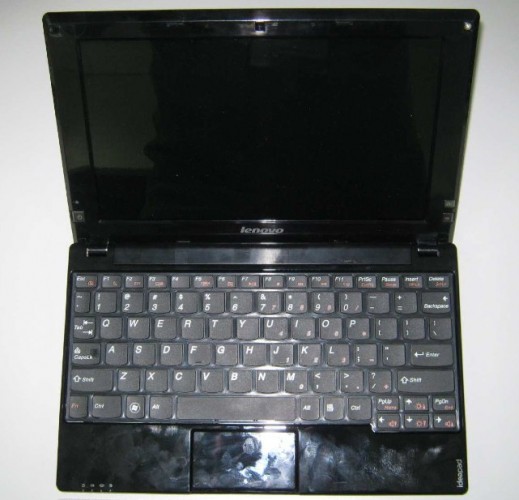
Lenovo IdeaPad Pineview netbook

Week in review time again, here we go! The Lenovo IdeaPad Pineview netbook hit the FCC Monday. The FCC is one of the most prolific leaker of gadgets and gear around and we love them for it. The CrunchPad is now said to be steamrolling toward a launch and may have a sponsorship deal in place. Word was a few weeks back that the tablet was dead.

The ORNL updated its Jaguar supercomputer with new 6-core Opteron processors recently. The newly updated rig grabbed the top spot on the list of fastest supercomputers in the world. The Samsung Go netbook is coming to the AT&T Wireless network as a subsidized offering. The machine will hit November 22 for $199.99 after rebates and a new agreement.

The Sony Ericsson Xperia X10 smartphone was spied on video this week. The snapdragon speed that the prototype spied previously lacked was in effect this time around. A paper claims that the Dell Streak MID will be hitting the AT&T network in 2010. I’m not sure that a MID will really make the grade; most of us want smartphones today.

A job listing over at Apple is looking for a game engineer. This has rumors swirling that Apple is set to develop first party games for its rumored tablet and the iPhone/iPod touch. We heard this week that the fix for the camera autofocus woes of the Droid may be as easy as wiping the lens well. Other reports claim that an unannounced software patch was pushed out to fix the issue.

The Windows Marketplace for Mobile hit WinMo 6.0 and 6.1 smartphones early in the week. The store had previously only been offered to those running WinMo 6.5 devices. The Malata R108T Windows 7 convertible touchscreen netbook broke cover Tuesday looking familiar. The rig has a 10.1-inch screen and Intel Atom processor, standard netbook fare.

MSI debuted the Wind Top AE2220 AIO 1080p computer mid-week with multitouch and a 21.5-inch display. The machine can be had with Intel Core 2 Duo power and Ion graphics. ATI unveiled the Radeon HD 5970 dual GPU video card this week. The thing is very powerful and has a price tag to match.

A report came in Wednesday that had Nokia using mostly Maemo rather than Symbian on its N-series devices by 2012. Nokia later came out and said that the announcement was premature. The sexy Dell Adamo XPS went on sale this week at $1799. It’s expensive; by man do I want one.

Vizio again grabbed the top spot on the LCD shipper list in the US for the quarter. People are flocking to the firms lower priced LCD TVs rather than the more expensive big names like Sony and Samsung. Sony Ericsson has confirmed that the Xperia X1 will not be getting a WinMo 6.5 update. A ROM hinted previously that such an update might be coming.

A new version of the ever popular Flip camcorder is coming in the first half of 2010 that has a sliding screen and WiFi. The WiFi will presumably allow you to send your movies directly to your computer without connecting a USB cable. The Sony Reader Daily Edition is available for preorder now for $400. The device has wireless access to the Sony eBook store.

Olive debuted a new 4HD Hi-Fi music server this week. The thing offers audiophile grade sound quality at a steep price of almost $2000. This is a strange report, the Apple tablet is said to be delayed until the second half of 2010 to get OLED and LCD versions. The odd part is how can a device be delayed when it was never officially announced?

Thursday we detailed the Chrome OS on video. The OS has been anticipated for a while and could replace Android in devices like netbooks. The Archos 9 PC tablet has been delayed with preorders shipping in December and the full retail launch pushed until 2010. You should be able to pick the thing up at retail locations once it launches.

Imation unveiled the world’s first wireless USB external storage solution Friday called the Pro WX. The HDD has a 30-foot range and enough speed for data backups sans cable. The Motorola Motus was spotted in a particularly blurry pic this week and promises an unusual form factor. The device appears to fold back.

The Pantech Impact is now avaialbl on the AT&T network for $99.99 after rebates. The device has haptics feedback for the touch panel front keypad. That’s it for this week, have a great Thanksgiving!

from: http://www.slashgear.com/slashgear-week-in-review-week-47-2009-2164088/
Read More......